Service Record · Sagenverse

Sole QA Analyst,
Two Years, One Process

As the only QA Analyst at Sagenverse, I manually tested Unity WebGL builds, React Native mobile apps, and the web platform — while helping build the entire QA process from the ground up.

I joined with zero formal QA experience and left as the point person for testing, regression, and release verification across two major releases.

Sec 01

Mission Parameters

Platforms & Environments
  • Mobile — iOS & Android React Native builds, on BrowserStack and on-device
  • Web — Chrome, Edge, and Safari against Dev, Staging, and Production
  • Unity WebGL — embedded interactive experiences
  • Admin Portal — 2.1 front end for org admins and user provisioning
Testing Types
  • Feature testing for new functionality and UI/UX flows
  • Regression testing from a full plan I wrote and maintained
  • Exploratory testing mimicking first-time and power users
  • Cross-platform checks for consistent mobile and web behavior
  • Release smoke testing for 1.0 minors, the 2.0 launch, and early 2.1
Tools & Collaboration
  • BrowserStack — iOS/Android and browser coverage
  • Monday.com — custom QA board for bugs, polish, and rare issues
  • GitHub — branching and version-control practice from the eng team
  • Miro — hackathon planning and feature brainstorming
  • Unity & React Native — regular new-build testing

Day to day I worked directly with Unity, front-end, and back-end developers plus the Product Manager and Engineering Lead — making sure issues were understood, prioritized, and actually fixed.
Sec 02

Mission Timeline

5 phases
01
Exploratory Onboarding Jul – Oct 2023
  • Came in with zero formal QA experience, so the goal was to use the product like a brand-new user.
  • Spent ~90 days inside the app: building Sagans, clicking everything, reporting anything that felt off.
  • Provided UX feedback and surfaced issues long-time team members had grown blind to.
02
Learning the Fundamentals Late 2023 – Mid 2024
  • Learned to properly document issues: repro steps, expected vs actual, environment, and media.
  • Inherited an old regression outline and used it as a base while learning what good coverage looks like.
  • Daily testing across features, developer request turnaround, and regular standups.
  • Met roughly an hour a month with leads from each engineering team to grow QA skills.
03
Hackathon & Rebuild Planning Oct 2023
  • Joined a week-long hackathon evaluating whether to keep Unity and whether the vision was technically possible.
  • Tested live as the team built prototypes, validating that key interactions actually worked in practice.
  • Got hands-on in Unity and learned how engine changes affect QA and regression risk.
04
Building 2.0 & Formalizing QA Late 2023 – May 2024
  • Wrote a fresh regression plan for Sagenverse 2.0 from the ground up as the app was rebuilt.
  • Helped shift the team from one-off DMs into a structured, trackable workflow.
  • Verified smaller 1.0 updates while preparing full coverage for the new 2.0 experience.
05
Release, 2.1 & QA Maturity May – Nov 2025
  • Participated in all minor 1.0 releases, the major 2.0 release, and early 2.1 development.
  • Owned smoke tests, hotfix verification, and build sign-off checks.
  • Expanded BrowserStack use and improved cross-platform coverage.
  • Tested a new front-end portal for organization admins managing employees and access.
Sec 03

Defect Pipeline

From Scattered DMs to a Clean Board

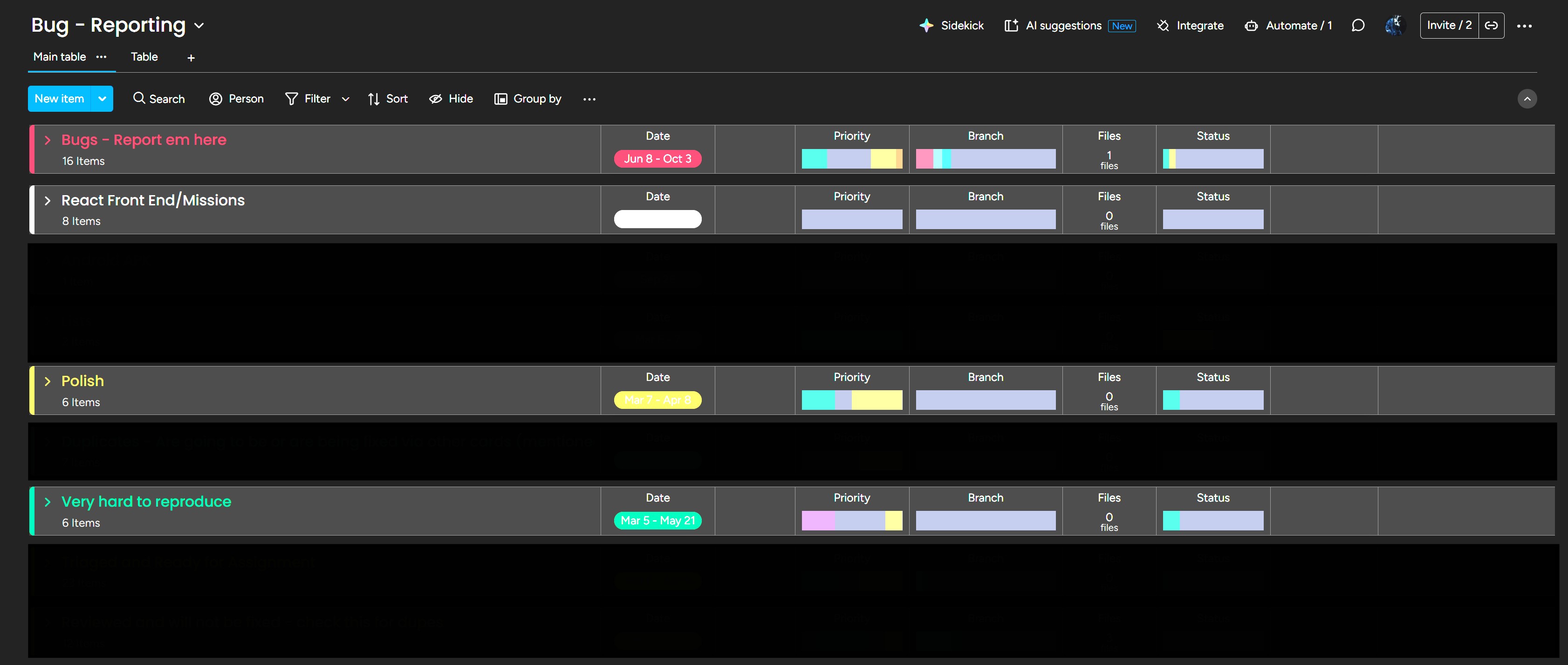
Bugs used to travel through direct messages, which made tracking nearly impossible. I helped design a dedicated QA board in Monday.com that the whole engineering org ended up using.

BugsMain intake for issues found during testing and by the team.
React FE / MissionsFeature-focused slices to keep work organized by area.
PolishNot true defects, but improvements that noticeably lift the UX.
Hard to reproduceKnown issues that were rare or environment-sensitive.
StatusNew · In Progress · Ready for QA · Verified.

Each week I walked the board with the Engineering Lead and Product Manager to confirm severity and make sure the right team owned each fix.

Example Monday QA board with lists for bugs, polish, and hard-to-reproduce issues; sensitive details blurred.
FIG. 2 — QA Board Sanitized

A sanitized view of the board I used daily. Sensitive details are intentionally blurred; the structure and workflow are representative.

Sec 04

Commendations

Process

Built QA From Scratch

Joined with no formal QA background and became the point person for testing, regression, and release verification — writing a full regression plan for 2.0 and establishing a repeatable process.

Quality

Caught the Subtle Issues

Found edge cases and UX problems that would have shipped without a dedicated tester. Engineers valued the friendly communication and the eye for little things that change the final experience.

Collaboration

Clearer Team Signal

Moved the team off ad-hoc DMs onto a structured, visible workflow, with weekly triage meetings that kept Product and Engineering aligned on priorities.

Sec 05

Log Entry — What I Learned

01

Good QA is as much about clear communication as it is about finding bugs.

02

Exploratory testing early surfaces issues before they get baked into the product.

03

Detailed repro steps and environment info save developers time and reduce back-and-forth.

04

Cross-platform apps demand a healthy respect for differences between browsers, devices, and OS versions.

05

Being friendly, curious, and collaborative makes it easier to ask hard questions about quality.

Want the full walkthrough?

I'm happy to walk through my regression plans, the Monday board, or how I'd approach QA at your company. Sagenverse's own work in digital storytelling is at sagenverse.com.